
Novels
Everything Began with Prosopagnosia
Hello, and welcome
Whether you are visiting for the first time or have been reading my work for some time, I’m glad you are here.
I am Ukyo Kitagi (Kitagi @ Creative Notes).
I publish stories on Kindle centered on themes of hope and renewal, and several of my works have reached No. 1 bestseller status in multiple categories.
Voice. Presence. Words.
I believe that something essential about a person can reside in the things we cannot see.
From that realization, I write stories about emotions that cannot easily be put into words, and about the distance between one person and another.
Now that I have completed my trilogy, I find myself looking back at the very first book.
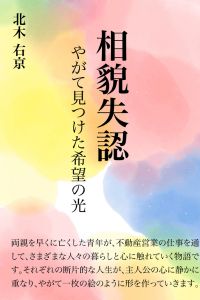
Prosopagnosia — The Light of Hope I Eventually Found.
Prosopagnosia is a condition in which recognizing and identifying faces can be difficult.
Using this as the subject of the story, I explored a simple but unsettling question:
Do we really see the people in front of us?
This was where everything began.
Do we truly see the person standing before us?
How much distance exists between what our eyes perceive and what our hearts feel?
With these questions in mind, I began writing this story.
The first book contains the core that connects the entire trilogy:
- The uncertainty of seeing
- The gap between distance and recognition
- Hope—the desire to keep searching, even so
Prosopagnosia is not simply a story about a condition or a disability.
What does it mean for two people to truly understand one another?
What does it mean to truly see another person?
It is a story that quietly observes human beings while touching upon these ambiguous questions—questions that may never have a single answer.
As you read, you may find yourself looking again at the way you see your own world, or noticing small emotions that you might otherwise have passed by without realizing them.
When life becomes busy, there are surprisingly few moments when we simply do nothing and let our minds wander.
We look at our phones.
We play videos.
We always seem to want to be doing something.
Reading, too, takes time.
And yet, while reading a book, there are moments when we suddenly look out the window, or sit with a cup of coffee and quietly sink into the spaces between the words.
I enjoy taking my time with a book, perhaps with a cup of coffee and something small to eat.
I feel that stories contain a kind of time—
time that does not exist for the purpose of understanding something quickly.
If you would like to read the trilogy in order, I would be very happy if you began with this first book.
The questions explored here lead into The Runner in the Sterile Room, and then into A Landscape of Normalization.
As the trilogy unfolds, the way the story is seen gradually begins to change.
- About the Book
- The World of the Sterile Room
- What I Tried to Portray
- When a Story Reaches Readers as Fiction
- About the Book
- The Museum as the Setting
- Time Within the Story
- A Perspective on Normalization
- Where the Setting and the Story Meet
- About the Book
- Thinking About the Limits of Understanding Through The Place Where the True Face Lies
- The Moment When a Character Can No Longer “Understand” Someone
- How to Portray the Moment a Relationship Changes
- About the Book
- What Makes a Place Feel Right?
- The People Who Chose Whom They Would Work With
- Why I Wrote Ristorante Lilasare
- About the Book
- Why I Created “Kitagi@ Creative Notes”
- Reflections and Notes Written After Completing a Novel
- Books by Ukyo Kitagi
- About the Book
About the Book
You can find the book here:
▶️ Prosopagnosia — The Light of Hope I Eventually Found
(Press “Read more” to see the English description.)
If anything you read here resonates with you, or if something stays with you after reading, I would be deeply grateful if you would leave a review or share your thoughts.
Thank you for reading to the end.
Through writing, I want to bring light to the things we cannot see.
I will continue to quietly weave these small lights into words.
If you would like, please join me on this journey of words by becoming a reader.
What It Meant for The Runner in the Sterile Room to Reach No. 1 in Both the Medical and Fiction Categories
Hello, and welcome.
Whether you are visiting for the first time or have been reading my work for some time, I’m glad you are here.
I am Ukyo Kitagi (Kitagi @ Creative Notes).
Voice. Presence. Words.
I believe that something essential about a person can reside in the things we cannot see.
From that realization, I have continued writing stories centered on hope and renewal.
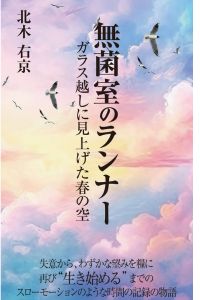
My novel, The Runner in the Sterile Room, reached No. 1 in both the Medical and Fiction categories on Amazon.
The book was published on January 31, 2026.
To be honest, I had never expected it to be read in the Medical category.
The World of the Sterile Room
A “sterile room” is a place far removed from everyday life for most people.
It is a space completely isolated from the outside world.
A world where even the smallest amount of bacteria can become a matter of life and death.
The time spent there has a rhythm and weight entirely different from ordinary life.
What I Tried to Portray
What I wanted to portray in this story was this:
Even when we cannot reach one another, we can still care about someone.
Even when people are physically separated by great distances,
we continue to seek connection with others.
I wanted to turn that small but persistent human impulse into a story.
When a Story Reaches Readers as Fiction
I wrote this novel before the COVID-19 pandemic.
Yet, when read today, some parts of it may carry a different meaning.
The fact that readers received it not as a medical explanation, but as a work of fiction,
is, I believe, what gave meaning to this result.
About the Book
You can find the book here:
▶️ The Runner in the Sterile Room — Looking Up at the Spring Sky Through Glass
(Press “Read more,” then scroll down to see the English description.)
Thank you for reading to the end.
Through writing, I want to bring light to the things we cannot see.
I will continue, quietly, to weave my thoughts into words.
Standing on the Same Stage — The Museum and A Landscape of Normalization
Hello, and welcome.
Whether you are visiting for the first time or have been reading my work for some time, I’m glad you are here.
I am Ukyo Kitagi (Kitagi @ Creative Notes).
Voice. Presence. Words.
I believe that something essential about a person can reside in the things we cannot see.
From that realization, I have continued writing stories centered on hope and renewal.
The Museum as the Setting
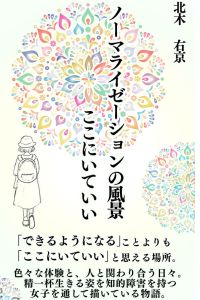
I visited the museum that became the setting for my third novel, A Landscape of Normalization.
It was late March 2026, this spring.
The day was clear and bright, and sunlight poured into the grounds with an almost early-summer warmth.
The place is known for its cherry blossoms, and the Miharu Takizakura cherry tree was in full bloom.
Within the quiet surroundings, there was a vivid sense of life.
This museum is not simply a backdrop for the story.
It is deeply connected to the atmosphere of the work itself.
Time Within the Story
As I walked through the museum, I saw people looking at the artworks, people working there, and time itself quietly passing.
Each seemed to exist separately, and yet together they formed a single flow within the same space.
That feeling also runs through the story.
A Perspective on Normalization
At the center of this story is a young girl with an intellectual disability.
Rather than focusing on judgments of what someone can or cannot do, I wanted to focus on something much simpler:
the act of simply being there.
Not accomplishing something.
Not being useful to someone else.
But simply existing, and having a period of time that belongs to you.
Portraying the value of that time is at the heart of this work.
Where the Setting and the Story Meet
A museum was a space that quietly embraced these moments—
moments without judgment or evaluation.
When the time within the story overlapped with the physical space of the real world,
I felt that what this story had been trying to express had, just a little, begun to take shape.
About the Book
A Landscape of Normalization is a story about the feeling that
“It is okay to be here.”
As the final work of the trilogy, it explores a quiet way of existing that can easily be overlooked within society.
You can find the book here:
▶️ A Landscape of Normalization — It Is Okay to Be Here
(Press “Read more,” then scroll down to see the English description.)
Thank you for reading to the end.
Through writing, I want to bring light to the things we cannot see.
I will continue, quietly, to weave my thoughts into words.
The Place Where the True Face Lies — How Much Can We Really Understand Another Person?
Hello, and welcome.
Whether you are visiting for the first time or have been reading my work for some time, I’m glad you are here.
I am Ukyo Kitagi (Kitagi @ Creative Notes).
I publish stories on Kindle centered on themes of hope and renewal, and several of my works have reached No. 1 bestseller status in multiple categories.
Voice. Presence. Words.
I believe that something essential about a person can reside in the things we cannot see.
From that realization, I write stories about emotions that cannot easily be put into words, and about the distance between one person and another.
Thinking About the Limits of Understanding Through The Place Where the True Face Lies
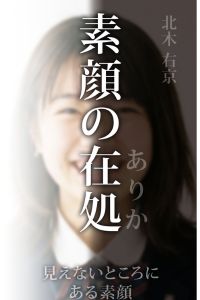
The idea of writing a story about a married couple who had been classmates became the starting point for The Place Where the True Face Lies.
They meet when they are in middle school, lose touch, and eventually reunite and become husband and wife.
When we meet someone again after many years, the impression we have kept in our memory can remain remarkably strong.
But once we actually begin living together, differences between the person we imagined and the person standing before us gradually begin to appear.
The stronger our impression of someone has been, the more confusing those differences can become.
That confusion can shake our sense that we truly understand the other person.
In The Place Where the True Face Lies, I wanted to explore what happens when we encounter the limits of our understanding—
how we accept that reality, and how we continue to build a relationship with someone despite it.
The Moment When a Character Can No Longer “Understand” Someone
There is a symbolic scene in which the protagonist begins to notice a change in his wife.
It happens when he opens the lunchbox she has prepared.
He has always thought of his wife as mature and composed.
But the lunchbox reveals a side of her that he never imagined.
Perhaps people do not suddenly become impossible to understand.
Perhaps we gradually lose sight of someone through the accumulation of small feelings of discomfort.
I wrote this scene as the first moment when that process begins.
How to Portray the Moment a Relationship Changes
As we spend more time with the same person, our relationship inevitably changes.
Just as we grow older, this is a natural part of life.
When we are in love, we may try to appear better than we really are because we want the other person to see us in a certain way.
But once we marry and begin sharing the same time and space, parts of ourselves that were previously unseen naturally come into view.
Our impression of the other person changes.
And the relationship changes with it.
In The Place Where the True Face Lies, I wanted to portray people learning to accept these changes while continuing to live alongside one another.
Each of us lives while facing the changes that arrive throughout our lives.
I hope this story might give you a moment to think about your own relationships, and about how much we can truly understand the people closest to us.
Thank you for reading to the end.
Through writing, I want to bring light to the things we cannot see.
I will continue to quietly weave these small lights into words.
If you would like, please join me on this journey of words by becoming a reader.
About the Book
You can find the book here:
▶️ The Place Where the True Face Lies
(Press “Read more,” then scroll down to see the English description.)
Why Was Ristorante Lilasare Born?
Hello, and welcome.
Whether you are visiting for the first time or have been reading my work for some time, I’m glad you are here.
I am Ukyo Kitagi (Kitagi @ Creative Notes).
I publish stories on Kindle centered on themes of hope and renewal, and several of my works have reached No. 1 bestseller status in multiple categories.
Voice. Presence. Words.
I believe that something essential about a person can reside in the things we cannot see.
From that realization, I write stories about emotions that cannot easily be put into words, and about the distance between one person and another.
What Makes a Place Feel Right?
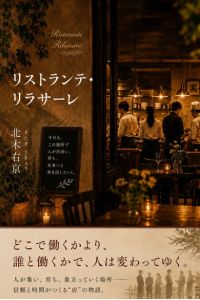
Ristorante Lilasare is a story set in an Italian restaurant.
It is not a story about the technical side of cooking.
Nor is it a story about a brilliant chef who rises to success.
A restaurant exists because of many different people.
Who do we work with?
What makes a workplace feel like a place where we belong?
In a sense, these are timeless questions, and they form the foundation of this ensemble story.
Rather than telling a glamorous story of success, I wanted to portray how both a place and the people within it grow through trust and the accumulation of everyday experiences.
I filled Ristorante Lilasare with events that could happen in almost any workplace.
If you were to replace the “restaurant” with your workplace, your school, your family, or your community,
how would the landscape before your eyes change?
I hope Ristorante Lilasare might give you a reason to think about that question.
The People Who Chose Whom They Would Work With
Who do we work with?
This is an important question in a workplace, where we spend much of our day.
Of course, salary, holidays, and benefits matter too.
But what if the people you worked with were people you genuinely connected with?
What if working with them simply felt easier?
Perhaps the way you feel about your work, and the way you approach it, might change a little.
Personally, I am someone who values
“Who I go with” more than “Where I go.”
Miyamoto, the protagonist’s closest friend, leaves his position as a chef sommelier at a two-Michelin-starred restaurant and joins Ristorante Lilasare.
He puts himself forward and takes a chance on a new restaurant.
The salary is by no means generous.
Even so, Miyamoto chooses who he wants to work with.
Narimiya, a younger colleague of the protagonist, is also invited to join several well-known restaurants.
Yet he chooses the restaurant run by his senior colleague.
He is told from the beginning that the pay will be modest.
Still, Narimiya chooses not the conditions,
but who he wants to work with.
Why did Narimiya choose Ristorante Lilasare?
The answer is written within the story.
What matters most to you in the place where you work?
The idea I portray in this story—
“Who do we choose to work with?”
—is only one possible way of looking at life.
Even so, I do not think it is a coincidence that so many people leave their jobs because of relationships with the people around them.
Why I Wrote Ristorante Lilasare
The simplest answer is that I wanted to write a story set in a ristorante.
It was not because I had been influenced by a television drama.
Italian food is very familiar to us.
For people in Japan, who have a particular fondness for noodles, dishes such as pasta are easy to enjoy and feel close to everyday life.
But I did not want to write about Italian cuisine itself, nor about the glamorous success of a chef.
Instead, I wanted to write an ensemble novel about people who are completely different from one another—
like the black and white pieces of an Othello board.
Even when they have different personalities and ways of thinking, they gradually move in the same direction, trying to make tomorrow a little better.
That was the kind of people I wanted to portray.
The culinary world is also a place where people come and go frequently.
Some people leave.
Others move on because they are ready for their next step.
But I do not necessarily think that people coming and going is a bad thing.
Perhaps what matters is not how long someone stayed,
but whether they developed an attachment to that place.
That is where I feel the relationship between people and places reveals itself.
In a world where people are constantly moving,
what kind of places make people want to stay?
How do people change through the people they choose to work with?
These are some of the questions I explore in Ristorante Lilasare.
Thank you for reading to the end.
Through writing, I want to bring light to the things we cannot see.
I will continue to quietly weave these small lights into words.
If you would like, please join me on this journey of words by becoming a reader.
About the Book
You can find the book here:
(Press “Read more,” then scroll down to see the English description.)
Why I Created “Kitagi @ Creative Notes”
Why I Created “Kitagi@ Creative Notes”
On December 1, 2025, I started “Kitagi @ Creative Notes” on my Ameba Blog.
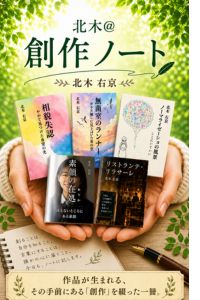
This month, I published the writings I have shared through
“Kitagi@ Creative Notes” as a book.
I have continued “Kitagi @ Creative Notes” as a place to write about what I felt after completing each work, as well as the background behind my creative process.
As I continued publishing my works and gaining experience in bringing them to readers,
I began to feel that I wanted to preserve the thoughts that could not be fully expressed in the novels themselves, along with the stories behind how each work came into being.
Before a work is completed, there are encounters with its characters, moments that spark the beginning of a story, and thoughts that emerge throughout the writing process.
These things are not directly written into the novels, but they are still an important part of what shapes each work.
“Kitagi @ Creative Notes” is a place where I record the background behind my creative work and the thoughts that become visible only after a work has been written.
Reflections and Notes Written After Completing a Novel
These are my reflections after writing a novel―and notes I want to keep for myself.
While I am writing a work, all I think about is moving forward.
To use a football analogy, it is like dribbling the ball toward the goal.
Of course, as I make my way toward that goal―the completion of the work―I think about the flow of the story, the backgrounds of the characters, and the themes and intentions I want to express through the work.
But while I am writing, my focus is always on one thing: completing the work.
I gradually turn a story that has not yet taken shape into words.
Listening to the voices of the characters, sometimes uncertain, always thinking, I move forward one line at a time.
That time belongs only to the writer and the work.
While writing, there is no need to explain the story to anyone.
What matters is whether I, as the writer, can truly believe in the story I am creating.
Whether I can feel that the characters are genuinely living their own lives.
That is what matters.
But the moment the manuscript is finished, the world surrounding the work begins to change.
A completed novel no longer belongs to the writer alone.
It passes into the hands of readers, where it encounters their own lives and experiences, and begins to exist as a book in its own right.
And at that point, there are things I sometimes find myself wanting to share.
“Why did I write this work?”
“What did I hope to convey through this story?”
“What thoughts and feelings gave birth to these characters?”
There are backgrounds that were never directly written into the novel, and thoughts that remain with me as the writer.
I started “Kitagi @ Creative Notes” as a place to record them.
This is not a collection of outlines written before I begin a work.
Nor is it a diary kept while I am writing.
It is a notebook for looking back on a work after it has been completed, with some distance and time.
If I have time to create an outline, I would rather begin writing.
If I have time to keep a diary, I would rather use that time to continue working on the manuscript.
That is how much time and energy it takes to bring a single work to completion.
There are things I cannot see while I am in the midst of writing a story, but which become visible only after it is finished.
The thoughts I placed within the characters.
The events that inspired me to write the work.
And the things I came to understand about human connections and life through the process of writing.
In “Kitagi @ Creative Notes,” I will continue to record the background behind my works, along with my experiences of creating, writing, publishing, and living as a writer.
It is a notebook, so it is not something that was ever meant to be complete from the beginning.
In fact, I do not believe a notebook created to preserve such a record can ever have a final form.
It is something that grows little by little, simply by continuing to write.
“This is what Ukyo Kitaki thinks about while writing his works.”
“What kind of time passes before a single book comes into being?”
I would be happy if you read these pages with such thoughts in mind―as though you were quietly opening a writer’s notebook.
This is not a place where I provide answers to my works.
It is a place where I preserve the background from which they emerged and the thoughts and feelings I had at the time.
I will continue writing these notes as a record of Ukyo Kitaki’s creative journey.
Books by Ukyo Kitagi
Each of the works I have published explores a different theme.
Yet there is something that runs through all of them: an exploration of the emotions that arise between people and the feelings that cannot always be put into words.
Through “Kitagi @ Creative Notes,” I will gradually share more about the background behind my works and the thoughts that went into creating them.
You can find more information about my published books below.
About the Book
(Press “Read more” to see the English description.)
I hope that discovering one of my books may give you an opportunity to feel something new, or to see something from a different perspective.
